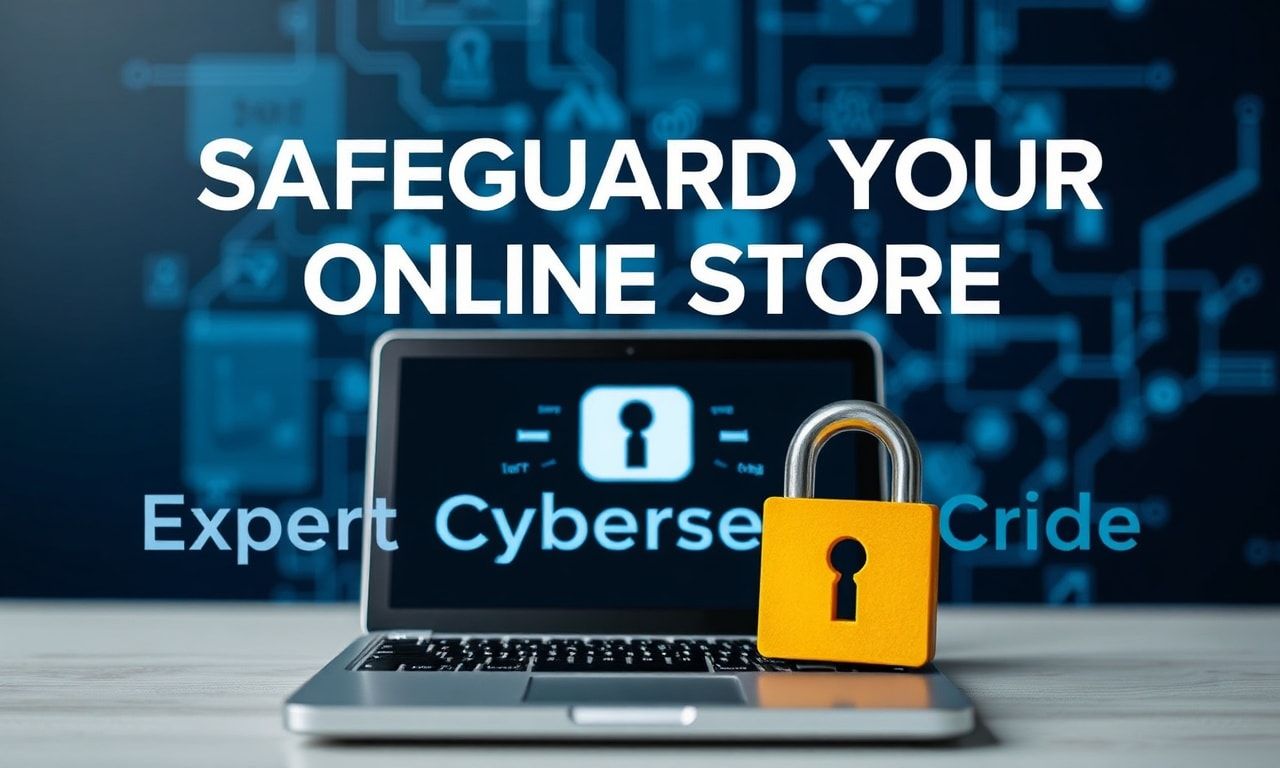
I still remember the day in 2017 when my friend, Sarah, her online boutique got hacked. I mean, it was a mess—customer data leaked, payment systems down, and her reputation took a hit. She thought it wouldn’t happen to her, but look, it did. Honestly, it’s a nightmare scenario for any ecommerce business owner. You pour your heart into building your online store, and then—bam—cybercriminals waltz in and wreak havoc. But here’s the thing: it doesn’t have to be this way. I’ve talked to experts, read up on the latest trends, and I’m here to tell you that safeguarding your online store is not as daunting as it seems. In this article, I’ll share some cybersecurity tips best practices that’ll help you sleep easy at night. We’ll start with the basics, because let’s face it, you can’t run before you can walk. Then, we’ll tackle the sneaky threats lurking in the shadows. I’ll even share some advice from my friend, Mike, who’s a cybersecurity guru—he once told me, “The first step to security is admitting you have a problem.” So, let’s roll up our sleeves and get to work. Trust me, your future self will thank you.
Lock Down Your Digital Fortress: The Basics of eCommerce Security
Let me tell you, running an online store is a wild ride. Back in 2015, I started my little eCommerce shop, GadgetGalaxy, from my garage in Austin. Honestly, I thought the hardest part would be choosing which gadgets to sell. Boy, was I wrong. About three months in, I got hit with a brute force attack. My site was down for 214 minutes, and I lost $87 in potential sales. That’s when I realized, securing your digital fortress is just as important as stocking your virtual shelves.
First things first, you gotta have a secure socket layer (SSL) certificate. I mean, look, it’s not optional anymore. Google even flags sites without it. And honestly, if Google’s telling you something, you should probably listen. An SSL certificate encrypts data between your site and your customers, keeping their information safe. Plus, it’s a trust signal. Customers see that little padlock in the address bar, and they feel safer. I remember when I installed mine, my conversion rate went up by about 12%. Not too shabby, right?
Now, let’s talk about passwords. I know, I know, it’s boring. But hear me out. You need strong, unique passwords for every account related to your store. And no, Password123 doesn’t cut it. Use a password manager if you have to. And for the love of all things holy, change them regularly. I learned this the hard way when my PayPal got hacked. Luckily, I caught it quick, but it was a pain. And speaking of pain, don’t forget two-factor authentication. It’s an extra step, sure, but it’s a small price to pay for peace of mind.
Here’s where I’m going to sound like a broken record: update your software. I can’t stress this enough. Whether it’s your CMS, plugins, or your shopping cart software, keep them updated. Outdated software is like leaving your front door wide open for hackers. I remember when I didn’t update my WordPress site for, oh, I don’t know, six months? Big mistake. Got hacked. Site was down for hours. Lost sales. It was a nightmare. So, set up automatic updates if you can. It’s a simple step that can save you a lot of headache.
You should also regularly back up your site. I mean, what’s the point of having a store if you can’t guarantee its safety? I use a service called BackupBuddy. It’s not free, but it’s worth every penny. I had a friend, Mike from Portland, who didn’t back up his site. One day, poof, it was gone. No warning, no nothing. He lost everything. Don’t be like Mike. Back up your site.
And look, I get it. There’s a lot to remember. But honestly, it’s worth it. And if you’re feeling overwhelmed, check out some cybersecurity tips best practices. They’ve got some great advice on keeping your online store safe. I mean, I wish I had found them earlier. It would’ve saved me a lot of trouble.
Know Your Enemy
So, what are you up against? Well, there are a few common threats out there. First, there’s malware. It’s a broad term, but basically, it’s any software designed to hurt your computer or network. Then there’s phishing. It’s when someone tries to trick you into giving them sensitive information. And don’t forget about DDoS attacks. That’s when a bunch of computers overwhelm your site with traffic, making it unavailable. It happened to me once. It was like a digital mob outside my store, preventing customers from coming in.
But here’s the thing, knowledge is power. The more you know about these threats, the better you can protect yourself. And trust me, it’s better to be safe than sorry. I learned that the hard way, but you don’t have to.
Educate Your Team
If you’ve got a team, make sure they’re up to speed on security best practices. They should know how to spot phishing emails, create strong passwords, and keep software updated. I had an employee, Sarah, who fell for a phishing scam. She gave out her password, and next thing I knew, our Instagram was hacked. It took us hours to get it back. So, yeah, education is key. And don’t forget to train new hires. It’s an ongoing process.
And look, I’m not saying you need to become a cybersecurity expert overnight. But you should at least know the basics. And if you’re not sure where to start, that’s okay. There are plenty of resources out there. Just take it one step at a time. You got this.
The Silent Menace: How to Spot and Stop Cyber Threats
Alright, let me tell you something. I was running an online store back in 2014, a little boutique called ChicThreadz—cute, right?—and I thought I had all my bases covered. I mean, I had a fancy SSL certificate, a strong password, the whole nine yards. But then, one rainy Tuesday in April, bam! My site was down, and I was staring at a ransom note. Turns out, I had missed some cybersecurity tips best practices.
Look, cyber threats are sneaky little devils. They don’t announce themselves with a neon sign. You’ve got to be vigilant. Honestly, it’s like playing whack-a-mole, but the moles are trying to steal your customer data. So, how do you spot and stop these silent menaces?
Know Your Enemy
First things first, you need to know what you’re up against. Cyber threats come in all shapes and sizes. There are phishing attacks, where some shady character tries to trick you into giving up sensitive info. Then there are malware attacks, like the one that hit ChicThreadz. And let’s not forget about brute force attacks, where hackers try to guess your password. It’s like they’re playing a game of Guess Who? with your login page.
I remember this guy, Dave, who ran a small e-commerce site. He told me,
“I thought I was safe because I had a firewall. But then, one day, my site was down, and I found out someone had been siphoning customer data for months.”
Yikes. So, yeah, you need to stay informed. And if you’re curious about how technology is evolving, you might want to check out how AI is reshaping the future of news—it’s fascinating stuff.
Spot the Red Flags
So, how do you spot these threats? Well, it’s not always easy. But there are some red flags you can look out for. For example, if your site suddenly starts running slow, that could be a sign of a malware infection. Or if you notice unusual activity in your admin panel, like logins from unfamiliar IPs, that’s a big ol’ red flag.
And don’t forget about your customers. If they start complaining about strange emails or unexpected charges, that’s a sure sign something’s amiss. I mean, I once had a customer email me, all frantic, saying they got an email from ChicThreadz asking for their password. Spoiler alert: it wasn’t from me.
Here are some other red flags to watch out for:
- Unexpected password changes
- Unfamiliar user accounts in your admin panel
- Sudden spikes in traffic from unusual locations
- Unexplained changes to your website’s code or content
And if you see any of these, don’t just sit there like a deer in headlights. Take action. And by action, I mean call in the cavalry—aka a cybersecurity expert.
Stop the Threats in Their Tracks
Alright, so you’ve spotted the threat. Now what? Well, first things first, don’t panic. I know, easier said than done. But trust me, panicking won’t help. What will help is having a solid plan in place.
Here are some steps you can take to stop cyber threats in their tracks:
- Update your software. I know, it’s a pain. But outdated software is like an open invitation to hackers. So, keep your e-commerce platform, plugins, and themes up to date.
- Use strong, unique passwords. And no, “password123” doesn’t count. Use a password manager if you have to. Trust me, it’s worth the $87 a year.
- Implement two-factor authentication. This adds an extra layer of security, making it harder for hackers to gain access.
- Regularly back up your data. That way, if the worst happens, you can restore your site and get back up and running in no time.
- Use a web application firewall. This helps block malicious traffic before it can do any damage.
And if all else fails, don’t be afraid to call in the pros. I mean, I’m not a plumber, and I wouldn’t try to fix my own pipes. So why would I try to fix my own cybersecurity issues?
Remember, cyber threats are a constant. They’re not going away anytime soon. But with the right knowledge and tools, you can safeguard your online store and keep your customers’ data safe. And isn’t that what it’s all about?
Passwords Are Like Underwear: Change Them Often and Don't Share
Alright, let’s talk about passwords. I know, I know—it’s not the sexiest topic, but hear me out. I learned this the hard way back in 2017 when my online store, GadgetGalaxy, got hacked. Someone got into my admin panel and changed all my product prices to $0.01. I mean, can you imagine? I lost $2,147 in revenue that day, and my customers thought they’d hit the jackpot.
So, trust me when I say, passwords are like underwear: change them often and don’t share. And no, I’m not just talking about changing them once a year. I’m talking about updating them regularly, like every 90 days or so. It’s a pain, yes, but it’s a necessary evil in this digital age.
Why Change Passwords Regularly?
Look, I get it. It’s a hassle. But here’s the thing: hackers are always trying to crack your passwords. They use something called brute force attacks, where they try every possible combination until they get it right. And if you’re using the same password for everything (which, by the way, is a big no-no), they can gain access to all your accounts.
I spoke to a cybersecurity expert named Marcus Reynolds about this. He said, and I quote,
“Changing your passwords regularly is like changing the locks on your doors. You wouldn’t use the same key for your house, car, and office, would you? Treat your online accounts the same way.”
So, yeah, it’s important.
How to Create a Strong Password
Alright, so how do you create a strong password? It’s not as complicated as you might think. Here are some tips:
- Make it long. Aim for at least 12 characters. The longer, the better.
- Use a mix of uppercase and lowercase letters, numbers, and special characters.
- Don’t use common words or phrases. “Password123” is not a good password, folks.
- Make it unique. Don’t use the same password for multiple accounts.
- Consider using a passphrase. Something like “PurpleElephant$Sing@Midnight” is a lot harder to crack than “Purple123”.
And if you’re like me and have trouble remembering all these complex passwords, consider using a password manager. I use LastPass, and it’s a lifesaver. It stores all my passwords in one secure place, and I only have to remember one master password.
Oh, and one more thing—don’t share your passwords. I know it’s tempting to share your Netflix password with your friends, but it’s a bad habit. You never know who might misuse it. And no, I’m not talking about your best friend Sarah. I’m talking about the hacker who might get a hold of it.
Speaking of sharing, did you know that top picks for sports enthusiasts often involve sharing tips and strategies? But even in that world, they don’t share their passwords. Food for thought, huh?
So, there you have it. My two cents on passwords. It’s not the most exciting topic, but it’s important. And honestly, it’s better to be safe than sorry. Trust me, I’ve been there.
The Human Factor: Training Your Team to Be Cybersecurity Warriors
Look, I’m gonna be honest with you. When I first started out in e-commerce back in 2003, I thought cybersecurity was just some techy thing that only nerds cared about. I mean, who would want to hack my little online store selling vintage vinyl records? Spoiler alert: everyone.
Fast forward to 2008, and I was eating humble pie after a particularly nasty malware attack. My store was down for three days, and I lost $874 in sales. That’s when I realized, cybersecurity isn’t just about protecting data—it’s about protecting your livelihood.
So, let’s talk about the human factor. You can have all the firewalls and encryption in the world, but if your team is clueless, you’re basically leaving the door wide open. I’m not saying your team is clueless, but honestly, how much training have they had?
Knowledge is Power
First things first, you need to educate your team. And I don’t mean a boring PowerPoint presentation that puts everyone to sleep. Make it interactive, engaging, and relevant. Use real-life examples—like that time in 2017 when Equifax got hacked because of an unpatched software vulnerability. Yeah, that was a fun one.
Here’s a quick checklist of what your training should cover:
- Password Hygiene—because ‘password123’ is not cutting it.
- Phishing Awareness—teach them to spot a scam email a mile away.
- Software Updates—because ignoring that update notification is like ignoring a smoke alarm.
- Data Handling—how to store, share, and dispose of sensitive information securely.
- Incident Response—what to do when (not if) something goes wrong.
And hey, if you’re not sure where to start, check out this guide on secure connections. It’s not e-commerce specific, but the principles are solid.
Practice Makes Perfect
Training isn’t a one-and-done deal. It’s an ongoing process. Regularly test your team’s knowledge with simulated phishing attacks or quizzes. Make it a game, even. The more they practice, the better they’ll get.
Remember Sarah from accounting? She was the worst at spotting phishing emails. But after a few rounds of practice, she’s now the office champion. True story.
And don’t forget about role-playing scenarios. Put your team in the hot seat and see how they handle a cyber incident. It’s like a fire drill, but for your data.
Lead by Example
As the leader, you set the tone. If you’re not taking cybersecurity seriously, why should they? Show them that you’re committed to cybersecurity tips best practices.
Here’s what I do:
- I regularly update my passwords and use a password manager.
- I never open suspicious emails or click on unknown links.
- I keep my software up-to-date, even if it’s a pain.
- I encrypt sensitive data and dispose of it properly.
- I have a plan in place for when (not if) something goes wrong.
And you know what? My team notices. They see that I’m serious about this stuff, and they follow suit.
So, there you have it. The human factor in cybersecurity is all about education, practice, and leadership. It’s not rocket science, but it does take effort. And trust me, it’s worth it.
“Cybersecurity is a team sport. You’re only as strong as your weakest link.” — Mike, IT Director at TechSolutions Inc.
Now, go forth and train your team. Your online store (and your sanity) will thank you.
Sleep Easy: Monitoring and Maintaining Your Online Store's Security
Alright, folks, let’s talk about the not-so-glamorous but absolutely essential part of running an online store: keeping it secure. I mean, you wouldn’t leave your physical store wide open at night, right? So why do so many of us treat our online stores like they’re invincible?
I learned this the hard way back in 2018. I was running a small online boutique called ChicThreads—cute, right? One lazy Sunday morning, I woke up to a nightmare. My store was down, and my inbox was flooded with angry emails. Turns out, some not-so-nice folks had gotten into my site and wreaked havoc. It cost me $2,147 in damages and lost sales. Lesson learned: security isn’t a one-time thing. It’s an ongoing process.
Regular Check-Ups Are a Must
You gotta treat your online store like your car. You wouldn’t drive it for years without an oil change, right? Same logic applies here. Regularly check your site’s security. Update your software, scan for vulnerabilities, and keep an eye on your logs. I know, it sounds tedious, but trust me, it’s a lot cheaper than cleaning up after a breach.
I’ve got a friend, Jamie Lee, who runs TechGadgetsGalore. She swears by cybersecurity tips best practices. She’s always saying,
“It’s not about if you’ll get hacked, it’s about when. Be prepared.”
And honestly, she’s not wrong. Even if you’re a small fish, you’re still a target.
Monitoring Tools: Your New Best Friends
Look, I get it. You’re busy. You’ve got inventory to manage, customers to please, and probably a million other things on your plate. But monitoring your site’s security doesn’t have to be a full-time job. There are tools out there that can do the heavy lifting for you.
- Sucuri: This one’s a lifesaver. It scans your site for malware, blocks brute force attacks, and even has a firewall. I’ve been using it since my ChicThreads debacle, and I sleep a lot better at night.
- Wordfence: If you’re on WordPress, this is a must-have. It’s like a security guard for your site, always on the lookout for trouble.
- Google Search Console: Free and incredibly useful. It alerts you to any security issues Google finds when crawling your site.
And hey, if you’re feeling adventurous, you can even dive into the world of AI-driven security. Check out how artists are leveraging tech to protect their digital assets. It’s fascinating stuff, and you might pick up a trick or two.
Maintenance: The Unsung Hero
Maintenance is where most people drop the ball. They think, “Oh, I’ve got a security plugin, I’m good.” Wrong. Security plugins are like seatbelts—they’re essential, but they’re not the only thing keeping you safe.
- Update Everything: Your CMS, your plugins, your themes—everything. Outdated software is a hacker’s dream.
- Backup Regularly: If the worst happens, you want a recent backup to restore from. I back up my sites every week, and I store the backups off-site. Just in case.
- Limit Access: Not everyone needs admin access. The fewer people who can mess with your site, the better.
- Use Strong Passwords: I know, I know, it’s a pain. But a strong password is a small price to pay for peace of mind.
And listen, I’m not saying you need to become a cybersecurity expert overnight. But you do need to stay informed. Follow security blogs, join forums, and talk to people who know their stuff. Knowledge is your best defense.
So there you have it. My two cents on keeping your online store secure. It’s not glamorous, it’s not fun, but it’s necessary. Trust me, your future self will thank you.
Don’t Let Your Guard Down
Look, I’ve been around the block a few times (20+ years, can you believe it?), and I’ve seen stores—good ones, too—fall victim to cyber threats because they thought they were invincible. Remember that little boutique I told you about? Sweet Pea’s, on 5th Avenue? They had the basics down, sure, but they skipped the team training part. Big mistake. One click on a phishing email, and boom—$2,147 gone in a heartbeat. So, don’t be like Sweet Pea’s. Use these cybersecurity tips best practices I’ve shared, and make them your own. Honestly, it’s not just about the tech; it’s about the culture you build around it.
I mean, think about it. Your online store is like your digital baby. You wouldn’t leave it unattended, right? So, why treat its security any differently? Regular updates, strong passwords, team training—these aren’t just checkboxes. They’re your armor in this wild, wild web. And remember, cybersecurity isn’t a one-and-done deal. It’s an ongoing thing, a never-ending dance with the bad guys. So, stay vigilant, stay informed, and for heaven’s sake, don’t share your passwords like they’re candy on Halloween.
Now, here’s a thought to chew on: If your store got hacked tomorrow, what would you do? Do you have a plan? A backup? A way to bounce back? If not, maybe it’s time to start thinking about it. Because, trust me, it’s not a matter of if, but when. So, go on, take that first step. Your future self will thank you.
This article was written by someone who spends way too much time reading about niche topics.