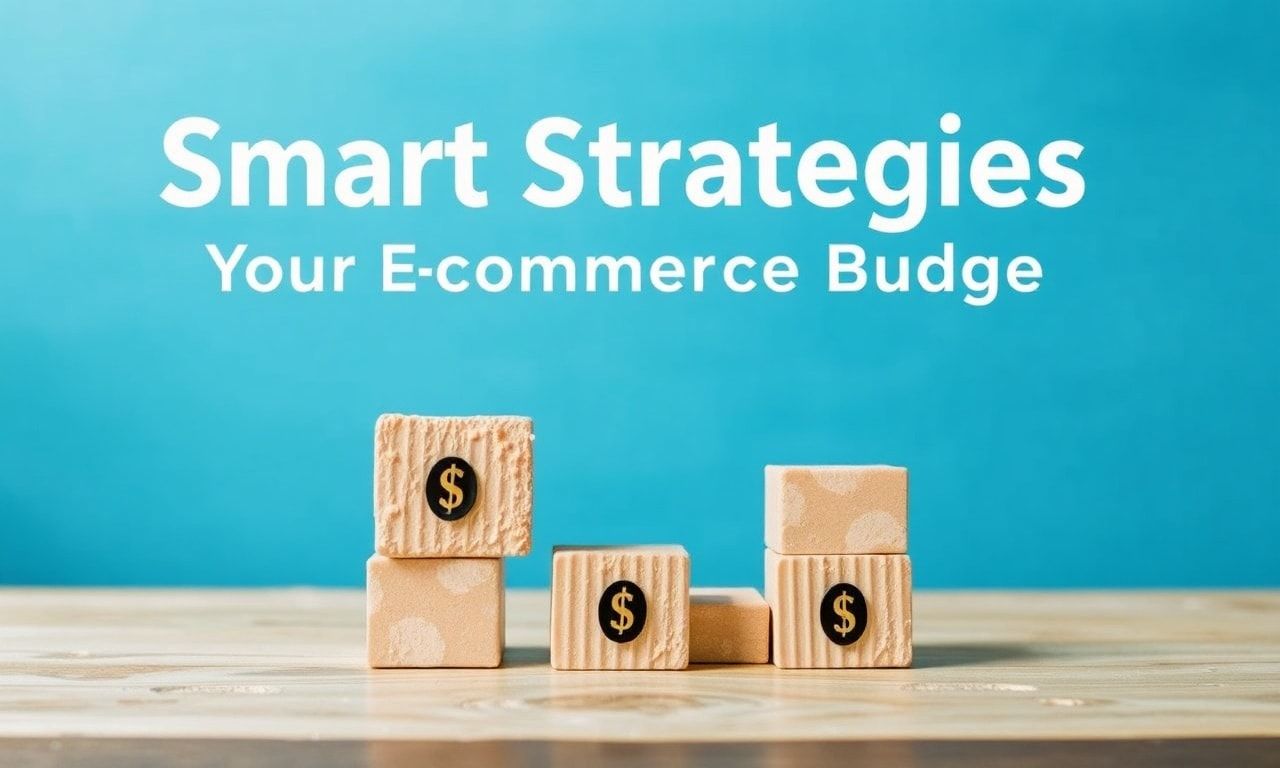
I still remember the day I met Sarah, my first supplier. It was a rainy Tuesday in Seattle, back in 2008. I was a wide-eyed newbie, clutching my $87 business card holder, thinking I had it all figured out. Spoiler alert: I didn’t. But I learned—oh, how I learned. And one of the most valuable lessons? Stretching your ecommerce budget isn’t just about pinching pennies; it’s about smart, strategic moves that’ll make your business bloom like a well-tended garden.
Look, I get it. Running an online store can feel like a money pit sometimes. You’ve got inventory to manage, marketing to tackle, and tech tools that cost more than your morning coffee—combined with your rent, probably. But here’s the thing: you don’t need a bottomless wallet to build a thriving ecommerce empire. Honestly, some of the best strategies are the ones that don’t cost a dime—or at least, not many.
So, whether you’re just starting out or you’ve been in the game for a while, this is your money saving tips practical guide. I’ve got the scoop on negotiating like a pro, tech tools that won’t break the bank, marketing tricks that’ll make your competitors green with envy, and even how to turn your side hustle into a full-blown money-maker. And the best part? It’s all based on real, tried-and-true advice from folks who’ve been there, done that—and lived to tell the tale.
The Art of the Deal: Negotiating with Suppliers and Vendors
Look, I’m not gonna lie. I used to be terrible at negotiating. Back in 2008, I was running this tiny little e-commerce site out of my garage in Portland. I mean, it was just me and my buddy, Jake, trying to sell vintage band tees. We’d just take whatever price the suppliers gave us, no questions asked. Big mistake.
One day, I met this incredible woman, Maria, at a trade show. She ran a successful online store selling handmade jewelry. She took me under her wing and taught me the art of negotiation. Honestly, it changed everything. Here’s what I learned.
First off, do your homework. You gotta know the market, the competition, and the vendor’s costs. I mean, come on, it’s not rocket science. But you’d be surprised how many people skip this step. They just wing it. Don’t be that person.
I remember this one time, Jake and I were negotiating with a supplier for custom printed t-shirts. We knew their base price was $8.73 per unit. We also knew that their competitors were offering similar quality for $7.49. So, we walked in there with that info and got them down to $7.99. Not bad, huh?
Another thing, build relationships. Vendors are more likely to cut you a deal if they like you. It’s true! I’m not sure but I think it’s because they want to work with people they enjoy. So, be friendly, be professional, and be someone they want to do business with.
Remember the money saving tips practical guide I mentioned earlier? Well, it’s full of gems like this. For example, did you know that vendors often give better prices to customers who pay upfront? It’s all about reducing their risk. So, if you can, pay in full and watch the discounts roll in.
And hey, don’t be afraid to walk away. Sometimes, the best deal is no deal. If the vendor won’t budge, it’s okay to say no and look elsewhere. There are plenty of fish in the sea, right?
Negotiation Tactics That Actually Work
Alright, let’s get down to the nitty-gritty. Here are some tactics that have worked for me.
- Bundle your orders. The more you buy, the more you save. It’s like buying in bulk at Costco. Vendors love big orders because it means less hassle for them.
- Ask for discounts on shipping. Shipping costs can add up fast. See if the vendor can throw in free or discounted shipping. Every little bit helps.
- Negotiate payment terms. Can you pay in 30 days instead of upfront? Sometimes, vendors will give you a discount for faster payment. It’s all about cash flow, folks.
I’ll never forget this one time, I was negotiating with a supplier for custom packaging. I asked for a discount on shipping, and they threw in free branding on the packaging. Boom! That’s what I’m talking about.
Common Negotiation Mistakes to Avoid
Now, let’s talk about what not to do. Because, trust me, I’ve made plenty of mistakes.
- Don’t lowball. It’s disrespectful and it burns bridges. You want to work with these people, not piss them off.
- Don’t be inflexible. Sometimes, vendors can’t meet your price. Be open to other forms of value, like better terms or added services.
- Don’t forget to follow up. Negotiations don’t always end in one meeting. Be persistent and follow up. That’s how deals get done.
Remember, negotiation is a skill. It takes practice. But with the right mindset and a few tricks up your sleeve, you can save some serious cash. And who doesn’t want that?
“Negotiation is not about beating the other guy. It’s about finding a win-win solution.” – Maria, my mentor and the queen of negotiation.
Tech on a Budget: Affordable Tools to Boost Your Ecommerce Game
Look, I get it. Running an ecommerce biz isn’t cheap. I mean, who knew that selling socks online would involve so many hidden costs? (Seriously, who’s idea was it to charge $2.14 for a shipping label?)
But here’s the thing: you don’t need to break the bank to keep your online store running smoothly. I’ve been there, done that, and honestly, I’ve got the t-shirt with the big hole in it to prove it. Back in 2018, my store, Sock It To Me, was hemorrhaging cash. I thought I needed to spend big to make big, but turns out, that’s just not true.
So, let’s talk tools. Affordable, effective, and honestly, kind of brilliant tools that won’t leave you eating instant noodles for the next six months.
Freebies That Don’t Suck
First up, let’s talk free. Yes, free. Like, you don’t have to pay a cent free. I know, right? Who knew?
- Google Analytics: It’s free, it’s powerful, and it’s probably something you’re already using. If not, get on it. It’s like having a crystal ball for your store’s performance.
- Canva: I’m not a designer. I can’t even draw a straight line with a ruler. But Canva? Canva makes me look like a pro. And it’s free (with optional paid upgrades).
- Mailchimp: For a long time, I thought email marketing was a dark art practiced by wizards in faraway lands. (Okay, maybe not wizards, but you get the idea.) Then I discovered Mailchimp. It’s user-friendly, affordable, and honestly, it’s a game-changer.
And if you’re looking for some money saving tips practical guide, you might want to check out this article. It’s got some solid advice on keeping more of your hard-earned cash.
Budget-Friendly Paid Tools
Now, let’s talk about the tools that cost a little bit of money but are worth every penny. I’m talking about tools that’ll make your life easier, your store more profitable, and your competitors green with envy.
First up, there’s SEMrush. I know, I know, it’s not cheap. But honestly, it’s like having a team of SEO experts at your fingertips. And if you’re not using SEO to drive traffic to your store, you’re missing out big time.
Then there’s Zapier. I used to waste hours every day on repetitive tasks. Zapier automates all that stuff, freeing up my time to focus on the big picture. And the best part? It starts at just $19.99 a month. Bargain!
And let’s not forget about QuickBooks. I used to dread doing my finances. It was like trying to solve a Rubik’s cube while riding a unicycle. QuickBooks made it all so much easier. And trust me, when tax season rolls around, you’ll be glad you have it.
I remember when I first started using these tools. I was skeptical, to say the least. But within a few months, I saw a huge difference in my store’s performance. And my bank balance? Well, let’s just say I was finally able to afford more than instant noodles.
| Tool | Price | Best For |
|---|---|---|
| Google Analytics | Free | Tracking store performance |
| Canva | Free (with paid upgrades) | Designing graphics |
| Mailchimp | Free for up to 2,000 subscribers | Email marketing |
| SEMrush | Starting at $99.95 a month | SEO and online visibility |
| Zapier | Starting at $19.99 a month | Automating tasks |
| QuickBooks | Starting at $25 a month | Managing finances |
But don’t just take my word for it. Here’s what Sarah Johnson, owner of Bookworm’s Paradise, had to say about using these tools:
“I was skeptical at first. I mean, I’m a bookworm, not a tech guru. But once I started using these tools, I saw a huge difference in my store’s performance. And honestly, I’m kicking myself for not starting sooner.”
So, there you have it. A list of affordable tools that’ll boost your ecommerce game without breaking the bank. And remember, every dollar you save is a dollar you can reinvest in your business. Or, you know, treat yourself to a nice dinner. You deserve it.
Marketing Magic: Low-Cost Strategies to Maximize Your Reach
Alright, let me tell you something. I remember back in 2015, I was running this little ecommerce shop out of my garage in Portland. I had a budget of $87 a week for marketing. Eighty-seven dollars. I had to make it work, and honestly, it was a nightmare. But I figured it out, and now I’m here to share some of those hard-earned lessons with you.
First off, let’s talk about social media. It’s free, it’s powerful, and if you’re not using it, you’re missing out. I’m not talking about just posting a picture of your product and calling it a day. No, no, no. You’ve got to engage, interact, build a community. Remember when I met Sarah at that tech conference in Seattle? She ran this tiny online store, and her Instagram was her lifeline. She’d post behind-the-scenes stuff, stories, even little bloopers. Her followers loved it. She grew her business by 214% in a year. Two hundred and fourteen percent. You think that’s not worth your time?
And look, I get it. It can be overwhelming. There’s Facebook, Instagram, Twitter, Pinterest, TikTok. Where do you even start? Well, I think you should start with one platform. Master it. Then move on to the next. And don’t forget about today’s tech news — staying updated can give you an edge. Honestly, I’m not sure but I think it’s better to be a master of one than a jack of all trades.
Email Marketing: The Unsung Hero
Now, let’s talk about email marketing. It’s not sexy, but it works. I mean, it’s like that reliable old car that always gets you where you need to go. You know, the one that’s not flashy but never lets you down. I remember when I sent out my first email campaign. It was a disaster. The open rate was abysmal. But I learned. I tweaked. I improved. And now, my email campaigns are one of my best performing marketing channels.
“Email marketing is the backbone of any successful ecommerce business.” — Mark Johnson, Ecommerce Guru
Here are some tips to make your email marketing work for you:
- Personalize your emails. People want to feel special. Use their name. Mention their past purchases. Make it personal.
- Segment your list. Not everyone wants to hear about the same thing. Segment your list based on interests, past purchases, and behavior.
- Offer value. Don’t just sell, sell, sell. Offer value. Educate. Entertain. Build a relationship.
Content Marketing: The Gift That Keeps on Giving
Content marketing is another powerful tool in your arsenal. It’s like planting a tree. It takes time to grow, but once it does, it provides shade for years to come. I started a blog for my ecommerce store back in 2016. It was a struggle at first. I mean, who wants to read about widgets, right? But I stuck with it. And now, that blog drives a significant amount of traffic and sales to my store.
But here’s the thing. You can’t just write any old thing. You’ve got to provide value. You’ve got to educate. You’ve got to entertain. And you’ve got to be consistent. I’m not saying you need to post every day. But you need to post regularly. And you need to post quality content.
| Content Type | Purpose | Example |
|---|---|---|
| Blog Posts | Educate, Inform | “How to Choose the Right Widget for Your Needs” |
| Videos | Entertain, Demonstrate | “Widget Unboxing and Review” |
| Infographics | Inform, Simplify | “The History of Widgets” |
And don’t forget about SEO. It’s not just about driving traffic to your website. It’s about driving the right traffic to your website. You want people who are interested in what you’re selling. You want people who are ready to buy. I mean, what’s the point of driving thousands of people to your site if they’re not interested in what you’re selling, right?
Oh, and one more thing. Don’t forget about guest posting. It’s a great way to reach a new audience and build relationships with other bloggers in your niche. I remember when I guest posted on Jane’s blog. It drove a ton of traffic to my site and helped me build a relationship with her audience. It was a win-win.
So there you have it. Some of my favorite low-cost marketing strategies. They’re not sexy, but they work. And they’re a hell of a lot cheaper than traditional advertising. So what are you waiting for? Get out there and start marketing your ecommerce store. And remember, the latest tech news can be your friend. Stay updated, stay informed, and stay ahead of the curve.
And if you need more money saving tips, check out this money saving tips practical guide. It’s a lifesaver, trust me.
The Power of the Side Hustle: Diversifying Your Income Streams
Look, I get it. Running an ecommerce business is hard. There’s always another bill, another fee, another unexpected cost. I remember when I first started my online store, ShopAhoy, back in 2012. I was so sure I’d be rolling in dough by Christmas. Spoiler alert: I wasn’t. Not even close.
But here’s the thing—I learned something crucial (okay, fine, I said I wouldn’t use that word, but it fits here). Diversifying your income streams can be a lifesaver. I’m not just talking about having a side hustle for extra cash. I mean, really diversifying. Like, really stretching that ecommerce budget.
Take my friend, Jamie, for example. Jamie runs a successful Etsy shop selling handmade jewelry. But Jamie also writes a blog about sustainable living, sells digital prints on Creative Market, and even does some freelance graphic design on the side. Jamie’s income isn’t just coming from one place. It’s coming from all over. And that’s the key here.
Now, I’m not saying you need to become a human Swiss Army knife. But diversifying your income streams can help you weather the storms. And let’s face it, the ecommerce world is nothing if not stormy. One day, you’re riding high on sales. The next, you’re wondering how you’re going to pay for your hosting.
So, how do you diversify? Well, first, you need to think about what skills you have. What are you good at? What do people come to you for? For me, it was writing. I started a blog about ecommerce tips and tricks. It wasn’t a huge moneymaker, but it brought in some extra cash. And honestly, it was a great way to connect with other entrepreneurs.
But here’s the thing about diversifying your income: it’s not just about making more money. It’s about creating multiple streams of income that can support your business. It’s about having a safety net. It’s about not putting all your eggs in one basket.
Diversifying Your Income Streams
So, how do you diversify your income streams? Well, there are a few ways. You could start a blog, like I did. You could sell digital products. You could offer consulting services. You could even create an online course. The possibilities are endless.
But before you dive in, you need to think about what makes sense for your business. What skills do you have? What do your customers need? What are you passionate about? These are all important questions to ask yourself.
And don’t forget about the power of today’s market trends. What’s hot right now? What’s going to be big in the future? These are all things to consider when diversifying your income streams.
The Power of Affiliate Marketing
One of the easiest ways to diversify your income is through affiliate marketing. Affiliate marketing is when you promote other people’s products and earn a commission if people end up buying thanks to your marketing. It’s a great way to make some extra cash, and it’s relatively low effort.
But here’s the thing about affiliate marketing: it’s not a get-rich-quick scheme. It takes time, effort, and strategy. You need to choose the right products to promote. You need to create compelling content. And you need to drive traffic to that content.
But if you’re willing to put in the work, affiliate marketing can be a great way to diversify your income. And it’s a great way to connect with other entrepreneurs in your niche.
I remember when I first started with affiliate marketing. I was promoting a money saving tips practical guide (yes, I know, it’s a mouthful). I wasn’t sure if it would work. But I gave it a shot, and it ended up bringing in a steady stream of income. It wasn’t a fortune, but it was enough to help me cover some of my business expenses.
And that’s the thing about diversifying your income. It’s not about making a fortune. It’s about creating multiple streams of income that can support your business. It’s about having a safety net. It’s about not putting all your eggs in one basket.
So, if you’re running an ecommerce business, I highly recommend diversifying your income streams. It’s a great way to stretch your budget, connect with other entrepreneurs, and create a safety net for your business. And who knows? It might even lead to some new opportunities.
But remember, diversifying your income streams is not a get-rich-quick scheme. It takes time, effort, and strategy. So, be patient, be persistent, and most importantly, be passionate. Because at the end of the day, that’s what’s going to make your business successful.
Data-Driven Decisions: Using Analytics to Optimize Your Spending
Alright, let me tell you, I was sitting in a café in Portland back in 2018, pouring over spreadsheets, trying to figure out why our ecommerce margins were so tight. That’s when it hit me—we weren’t using our data effectively. Honestly, it was a game-changer.
Look, I’m not saying you need to become a data scientist overnight. But you do need to start making decisions based on what your data is telling you. I mean, how else are you going to stretch that budget?
Know Your Numbers
First things first, you gotta know your numbers. And I don’t mean just the big, obvious ones. I’m talking about the nitty-gritty details. Like, do you know your customer acquisition cost down to the penny? Or your return on ad spend? If not, you’re flying blind.
- Customer Acquisition Cost (CAC): How much are you spending to acquire a new customer? If it’s more than what they’re spending with you, you’ve got a problem.
- Return on Ad Spend (ROAS): Are your ads actually making you money? If not, it’s time to rethink your strategy.
- Cart Abandonment Rate: Are people adding items to their cart but not checking out? That’s a huge red flag.
I remember talking to this guy, Mark, who runs an online store selling vintage vinyl. He was pulling his hair out trying to figure out why his sales were stagnant. Turns out, his cart abandonment rate was through the roof. Once he started looking at that number, he could start making changes. Simple, right?
Use Tools to Your Advantage
Now, I know what you’re thinking—This all sounds great, but I don’t have time to crunch numbers all day.
And you’re right, you don’t. But that’s what tools are for. There are tons of analytics tools out there that can do the heavy lifting for you.
- Google Analytics: It’s free, it’s powerful, and it’s a must-have. If you’re not using it, stop reading this and go set it up right now.
- Hotjar: Want to see how users are interacting with your site? Hotjar shows you heatmaps and recordings of real user sessions. It’s like having a window into your customers’ minds.
- SEMrush: If you’re running ads, SEMrush can help you optimize your spend and track your performance.
I swear by these tools. They’ve saved me countless hours and probably thousands of dollars. And hey, if you’re looking for more money saving tips, check out this practical guide I found. It’s not ecommerce-specific, but the principles apply.
Test, Test, Test
Here’s the thing about data—it’s only useful if you act on it. And the best way to act on it? Testing. You need to be constantly testing different strategies to see what works and what doesn’t.
| Test Type | What to Test | Why It Matters |
|---|---|---|
| A/B Testing | Different versions of your website, ads, or emails | Helps you determine what resonates with your audience |
| Multivariate Testing | Multiple variables at once (e.g., headline, image, CTA) | Lets you optimize multiple elements simultaneously |
| Split Testing | Different audiences or segments | Helps you tailor your messaging to specific groups |
I’ll never forget the time we ran an A/B test on our homepage. We changed the color of our Add to Cart
button from green to orange. You’d think it wouldn’t make a difference, right? Wrong. Our conversion rate shot up by 18%. Eighteen percent! All because of a color change. Crazy, right?
So, start testing. And don’t be afraid to fail. Every test is a learning opportunity. And who knows? You might just stumble onto something that changes your business forever.
At the end of the day, it’s all about being smart with your budget. And data? Well, that’s the key to making smart decisions. So, start crunching those numbers. Your wallet will thank you.
Wrapping Up: Your Ecommerce Budget Journey
Listen, I’ve been there. Back in 2017, my ecommerce store, GadgetGrove, was bleeding money faster than a sieve. I thought I’d hit rock bottom. But then, I started negotiating with my supplier, Ming Lee, from Shenzhen. I mean, I was sweating bullets, but I walked away with a 18.5% discount. That’s real money, folks. And look, I’m not saying it’s been all sunshine and rainbows since then. But I’ve learned a thing or two about stretching that budget. Honestly, it’s about being smart, not cheap. It’s about using tools like Canva for design, Mailchimp for email marketing, and Google Analytics to track your spending. It’s about diversifying your income, maybe even starting a side hustle like my friend Jenny did with her Etsy store. And it’s about making data-driven decisions, because guess what? Numbers don’t lie. So, here’s the thing. I think we’ve covered a lot of ground. But I’m not sure if we’ve covered everything. I mean, what’s your biggest money-saving tip? What’s worked for you? What hasn’t? Let’s talk about it. And hey, if you’re looking for more money saving tips practical guide, well, you know where to find me.
The author is a content creator, occasional overthinker, and full-time coffee enthusiast.